RISD
Designing for Others Studio
Choose a user group to research and assist through design.
Toll Collectors have one of the highest rates of suicide among all occupants in the U.S. My goal for this project was to combine psychology with design in order to optimize the effect of one's environment on the human psyche.
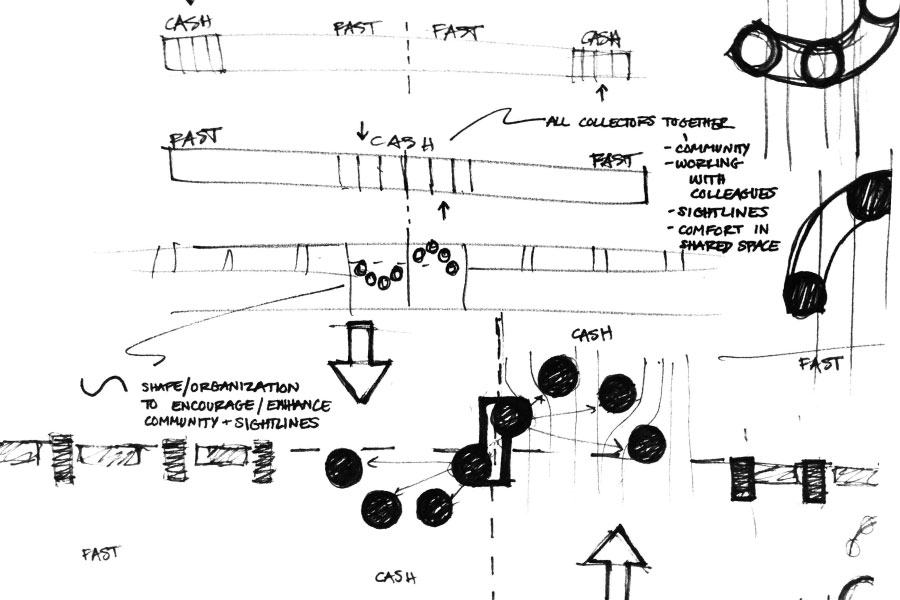
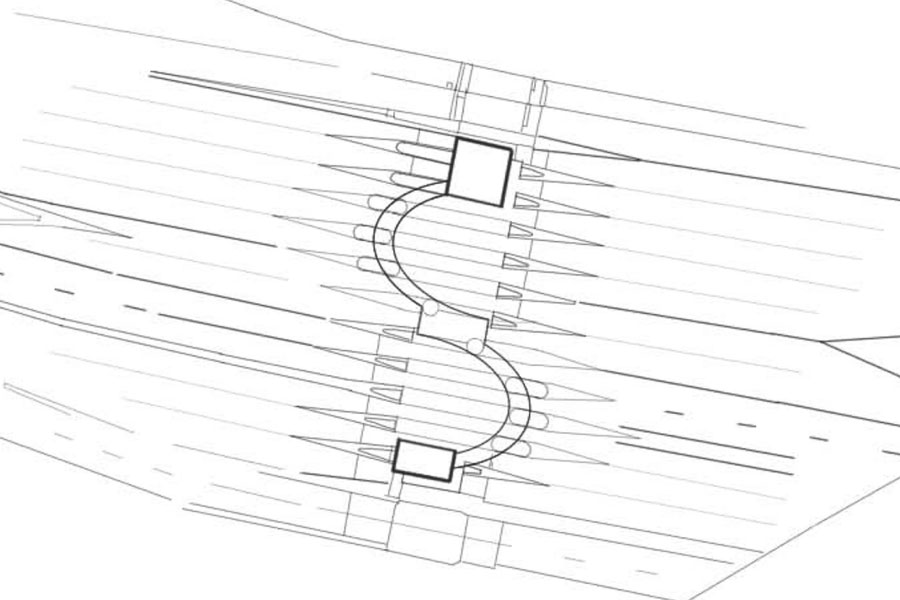
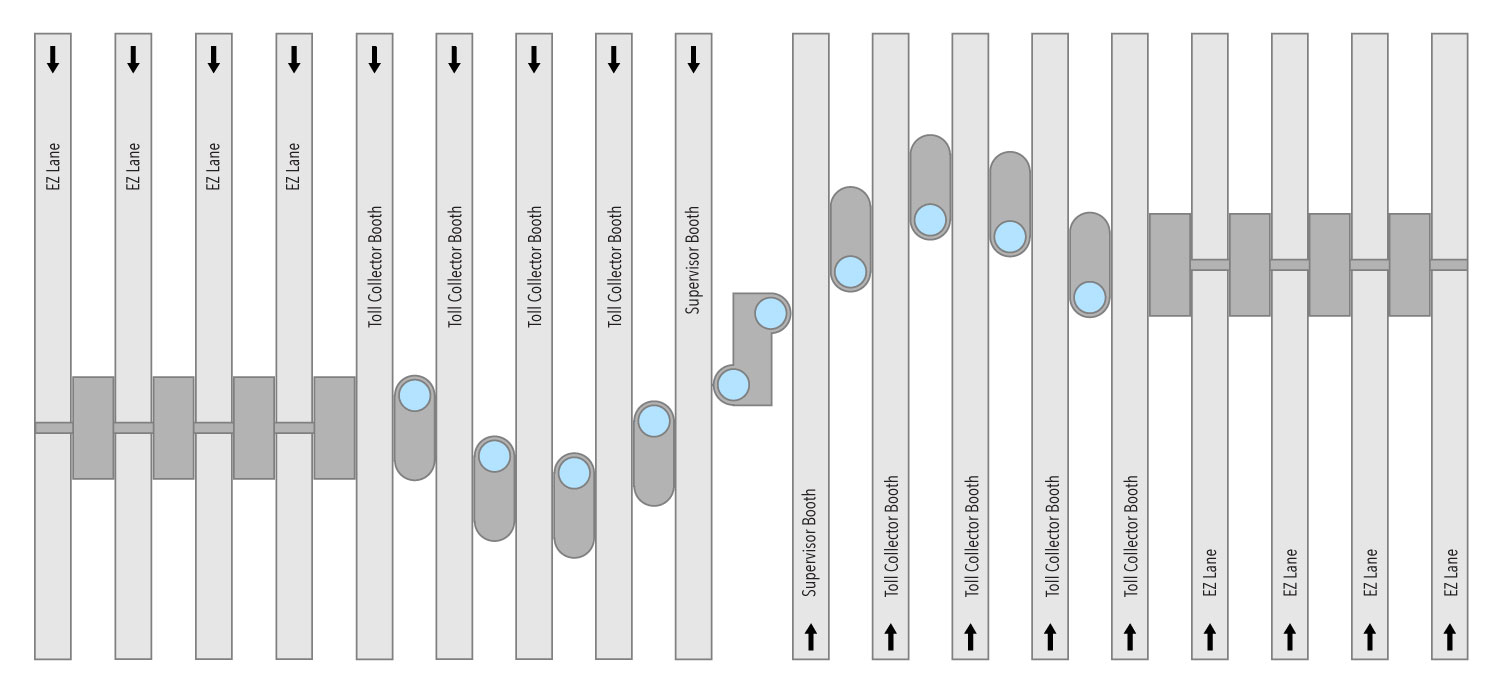
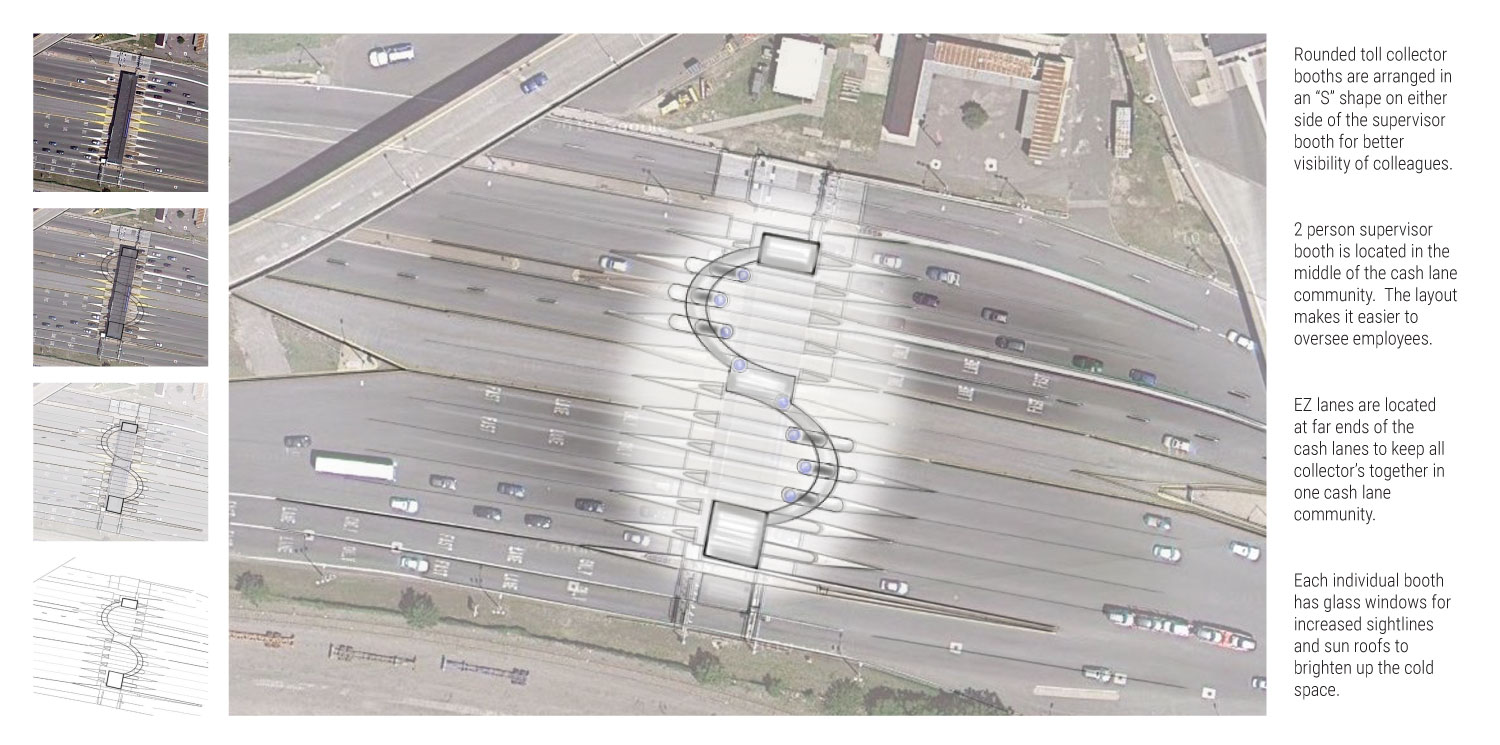
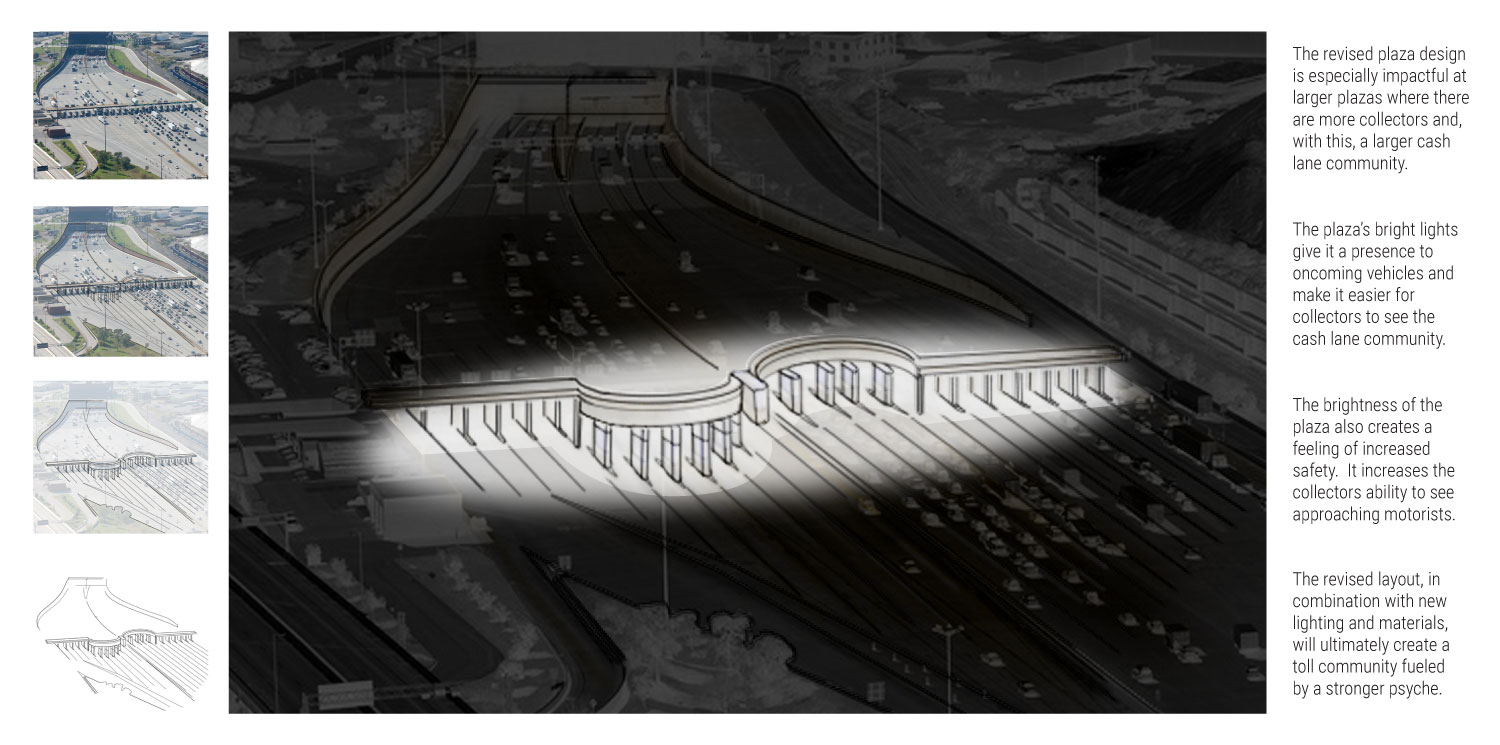
“S” shaped plaza to increase sightlines between colleagues, create a feeling of mutual space, and to promote the notion of a workplace community.
A combination of long hours, monotonous work, lack of communication, and uncomfortable working environments has led to the deterioration of both the physical and psychological health of numerous toll collectors.
*http://www.cdc.gov
Strategically designing a new environment can completely change the way one behaves and feels. Optimizing the power of design on the human mind can ultimately lead to a stronger psyche.
Name: John Fargo
Age: 27
Occupation: Toll Collector
Employer: Massachusetts Department of Transportation
Experience: 3 years (seasonal)
Toll Plaza Location: Exit 8 Palmer and Exit 3 Westfield
Hours: 2pm - 10pm, May - Sept., Dec. - Jan.
*Per his request, John’s real name will remain undisclosed.
This department oversees divisions of transportation within the state, including the Highway Division, and undertakes hundreds of projects each year to improves the state’s transportation networks.
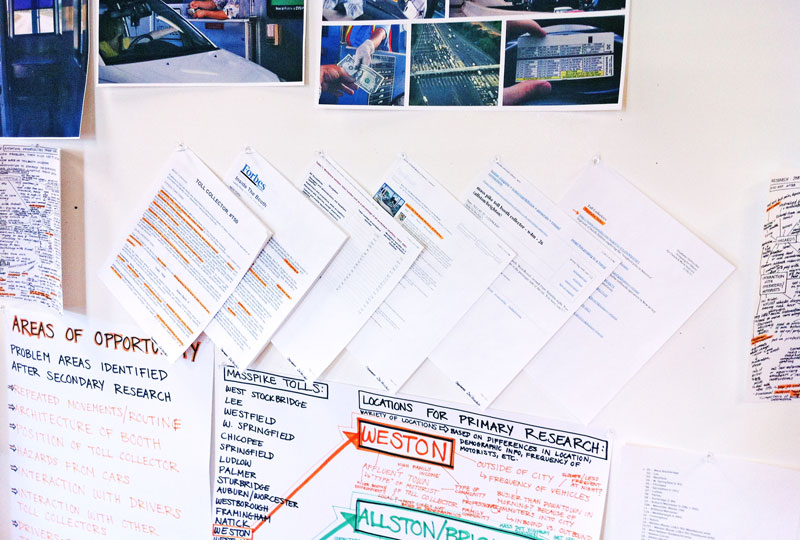
Initial research on the MassDOT Highway Division, toll plaza regulations, lane systems, queuing patterns, EZ lanes, as well as articles on organization psychology, scientific management, and psychological health.
Interview with John and attempted interview with the Massachusetts Department of Transportation.

“The booth is pretty cold, pretty impersonal.”
“There’s just a constant flow of traffic.”
“It’s like working outside... It gets really hot during the summer.”
“You get dirty, especially when trucks drive by.”
“You meet some interesting drivers...”

Transfer after transfer and no information about whom to speak with regarding toll plaza design.
After extensive secondary research and my interview with John, I decided to drive up and down the Mass Pike for a first hand account of the situation. I drove through toll plaza after toll plaza at different times of the day on different days of the week, and collected research based on my interaction with each collector.
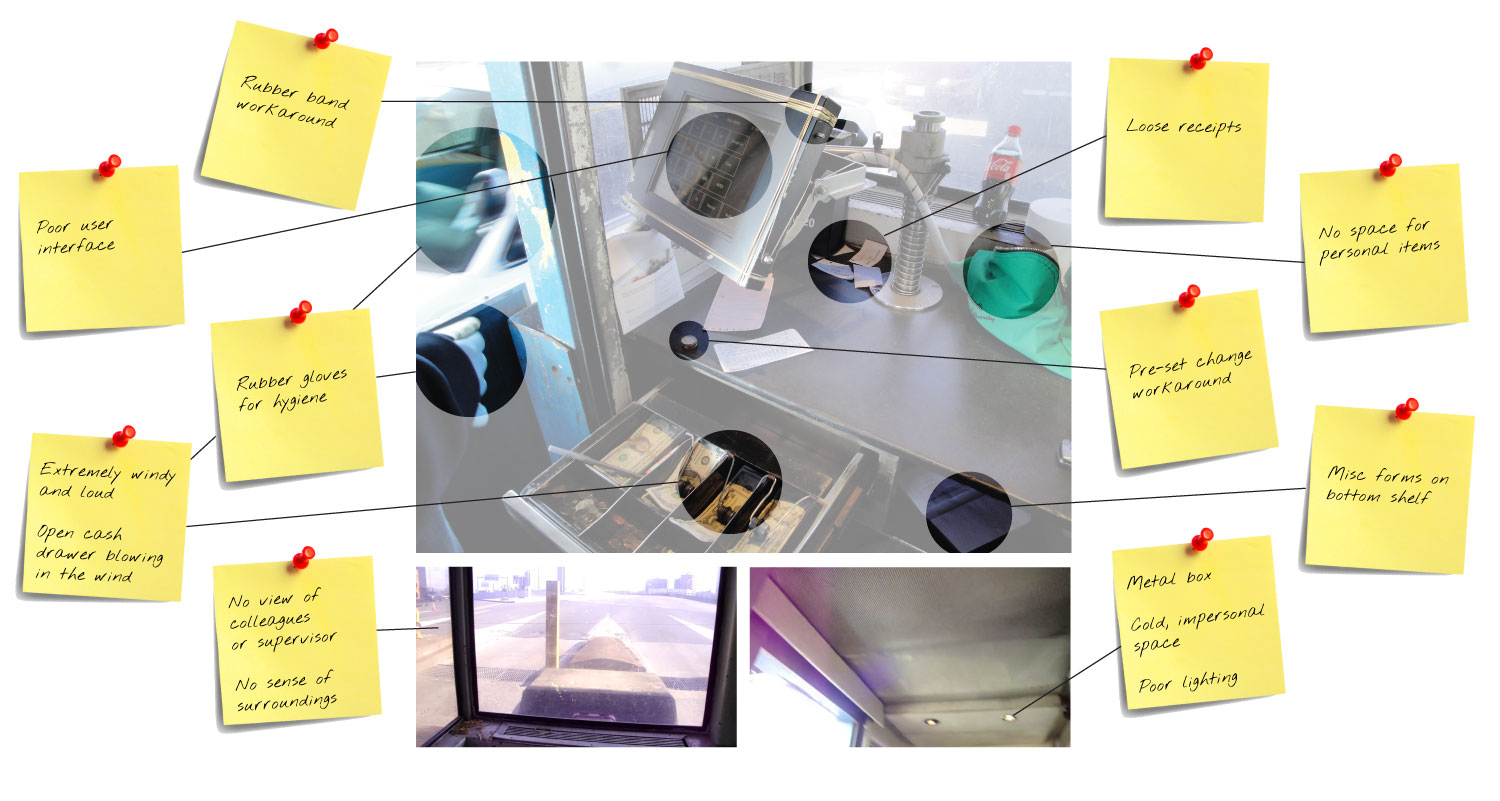
But this wasn’t enough... In order to gain valuable insights into life inside a toll booth, I needed to put myself in the collector’s position. So, after numerous failed attempts to schedule a toll visit with MassDOT, I just went for it. I hopped in alongside one willing toll collector and was able to get a first-hand experience of the work space, working conditions, and even some workarounds.
Unmute video to hear noise level inside booth
No sightlines.
No sense of surroundings.
Isolated from colleagues.
No sense of work community.
No communication.
Not acknowledged by motorists.
Feel trapped inside cold metal box.
Impersonal space.
Squeezed in between EZ lanes.
Rubber band workaround.
Pre-set change on counter.
Wind blowing papers.Excess receipts.
Poor air quality.
Noisy.
Constant shuffling of cash.
Monotonous work.
Constant flow of traffic.
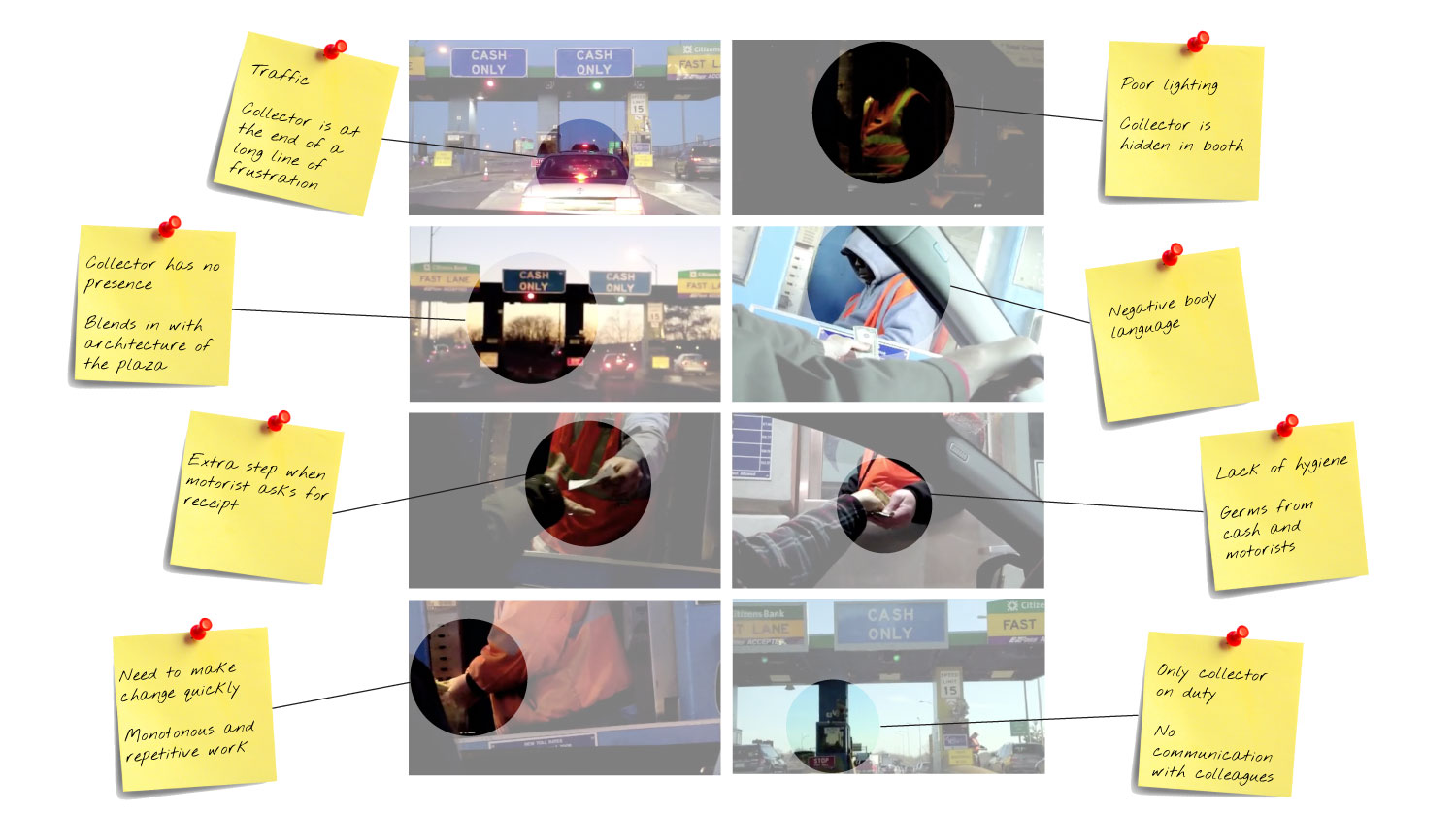
Collector blends in with the architecture of the plaza.
Very little communication with driver, if any.
At the end of a long line of frustration.
Quick interactions.
Need to work quickly.
Overall negative body language.
Many steps required to make change.
Rubber gloves v. none.
Sitting v. standing.
Long reach to collector.
Collector and driver at different heights.
Finding the right lane when approaching plaza (cash v. EZ lane).
No personalization of space.
Constantly changing locations and shifts.
Constant traffic.
Continuous work.
Windows always open.
Dirt/grime.
Noisy.
Hot summers and cold winters.
Booth layout (collectors and supervisors).
Suicide rate statistics.
MassDOT Highway Division information.
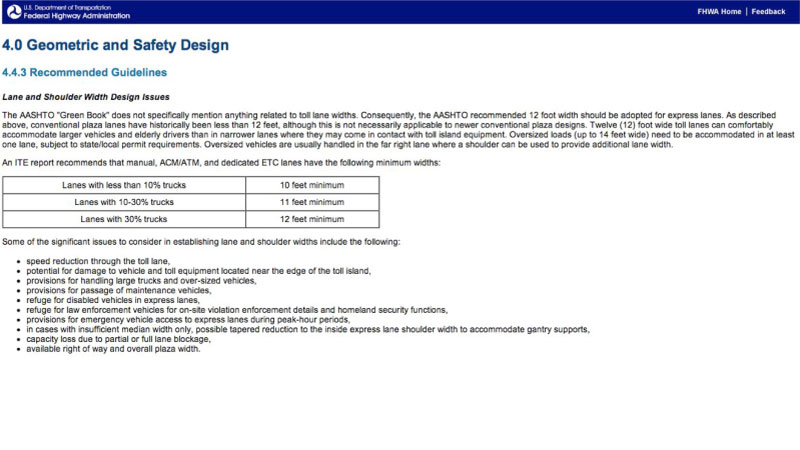
Toll plaza regulations and lane systems.
Queuing patterns.
Future of EZ lane.
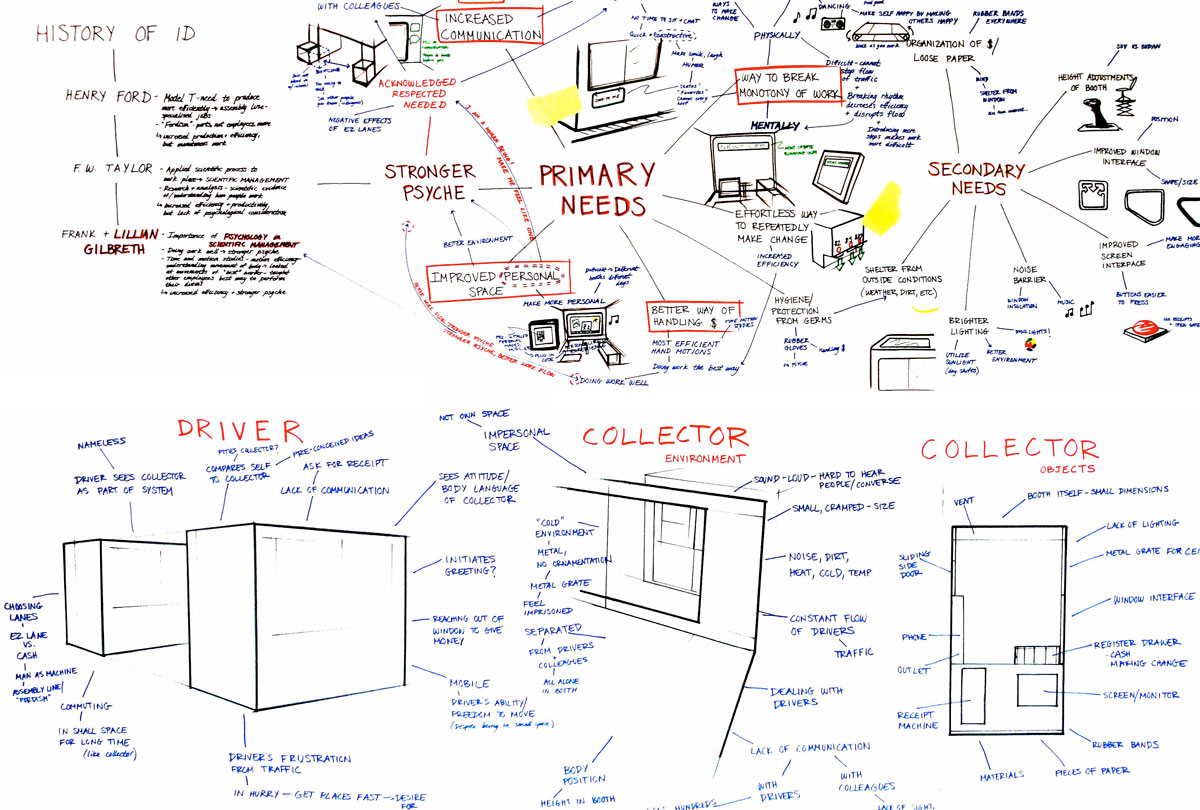
Organizational psychology.
Scientific management.
Psychological health.
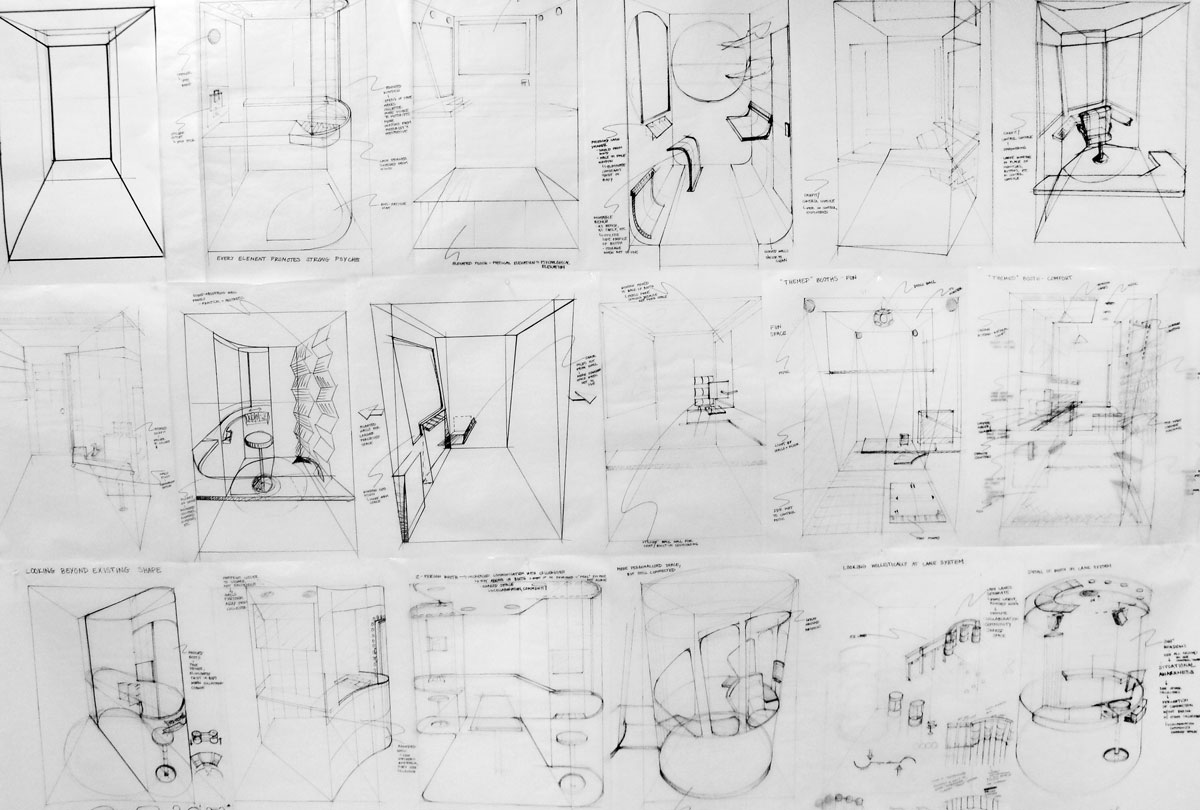
Concepting around ways to outfit the interior of existing toll booths, and exploring toll booth shapes outside of standard booth dimensions to transform the toll collector’s experience.
Existing Booth with Improved Features
Useful products
+
Increased efficiency
+
Increased productivity
+
Better performance
=
Stronger psyche
Back to John for feedback
“Little adjustments like the wall mounted flip up chairs would make a huge difference.”
Customizable Existing Booth
Customization
+
Personalized space
+
Comfort
+
Habitability
=
Stronger psyche
Back to John for feedback
“I like the improvements made to the existing booths. They look fun.”
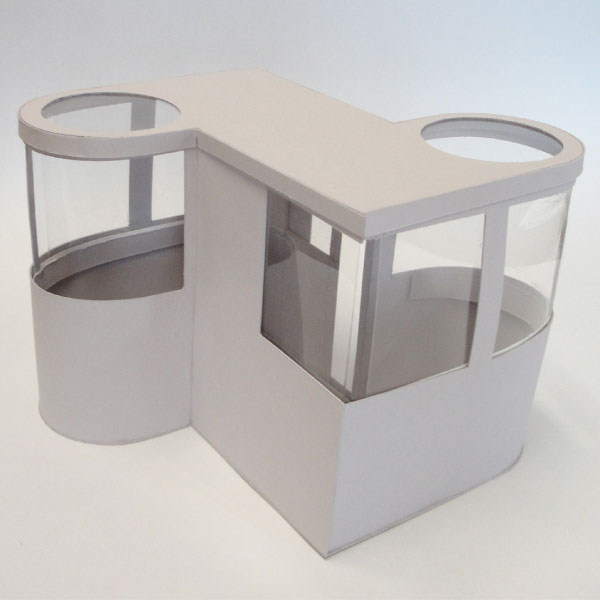
Two-Person Booth
Shared space
+
Sense of safety
+
Collaboration
+
Sense of community
=
Stronger psyche
Back to John for feedback
“I think my favorite is the 2 person booth... The work area would be vastly improved, and by working along with someone I would say workers would find comfort in knowing there is someone within a few feet should they have a situation or emergency.”
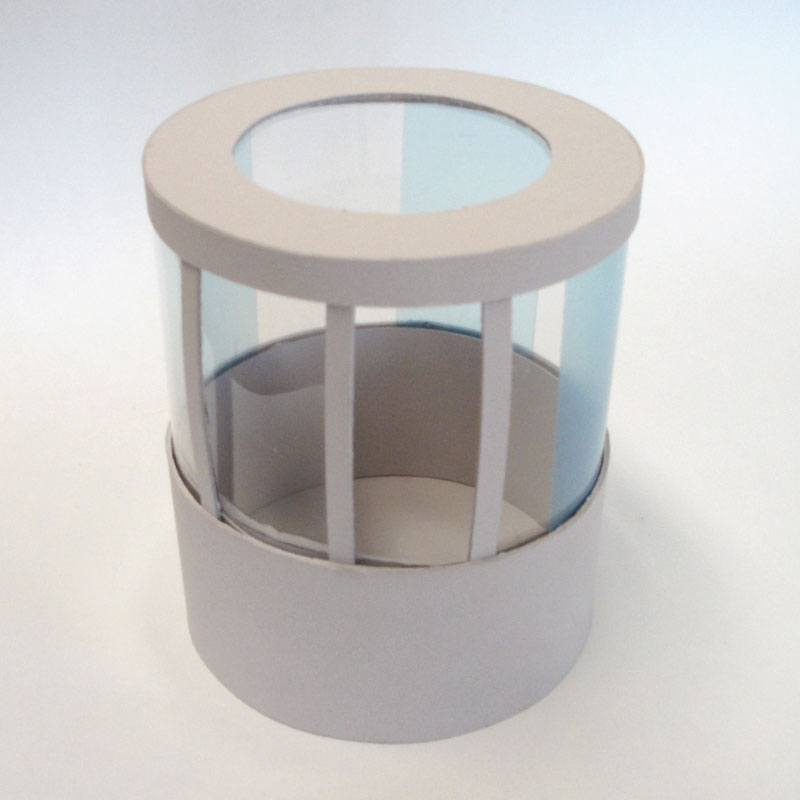
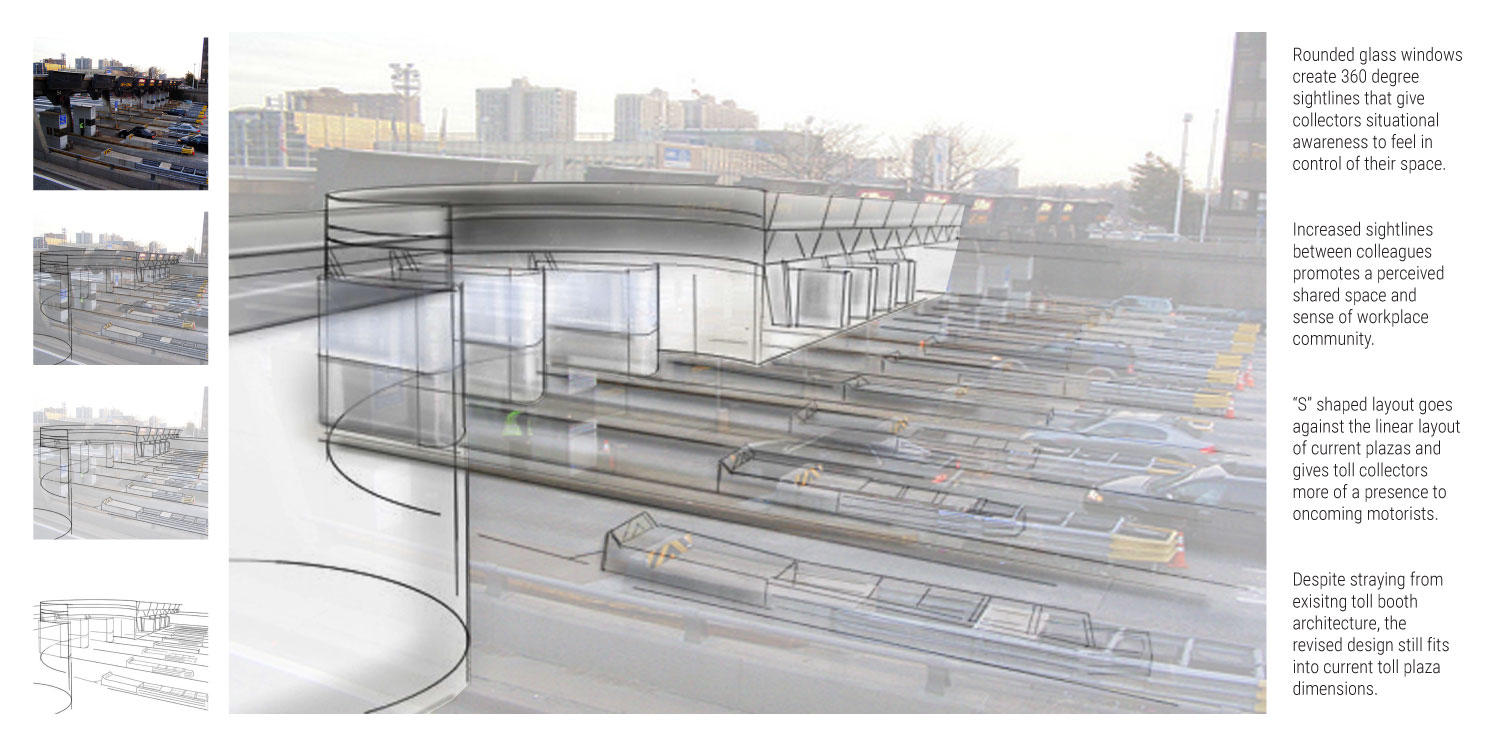
Round Booth
360 degree sightlines
+
Situational awareness
+
Sense of control
+
Perceived shared space
=
Stronger psyche
Back to John for feedback
“I also love the round booth, sort of looks like a cockpit or traffic control center. The ability to see in all directions around you would be very important, in every aspect of the work shift. And the addition of the sun roof to brighten things up would be great.”
Thinking bigger... Looking at the toll plaza layout in order to drastically transform the toll collector’s experience.
Back to John for feedback
“The supervisor would also be taking tolls and working a shift, especially during busier hours of the day (lunch time, rush hour)”
Back to John for feedback
“At the larger interchanges, most of the time, the shift supervisor would be overseeing more like 10-12 employees, and would not collect tolls unless necessary. The smaller interchanges usually had 2 cash lanes while the larger ones typically had more like 3-4 cash lanes.”
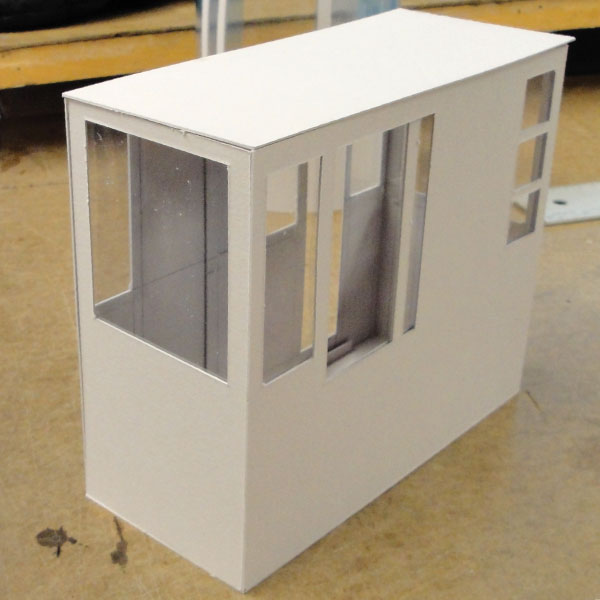
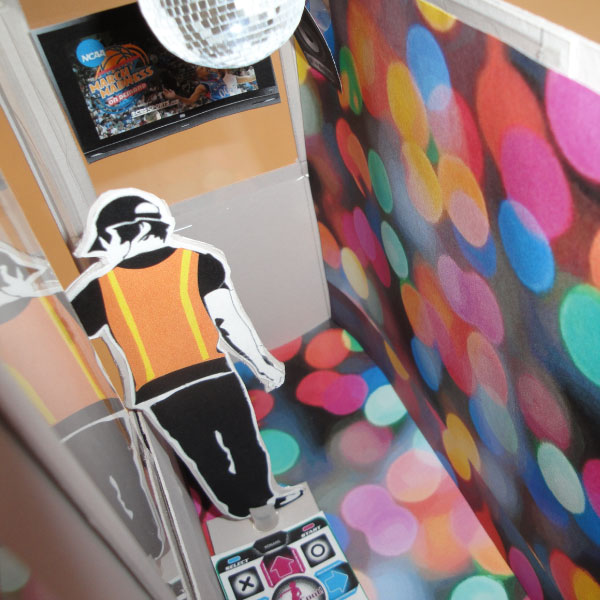
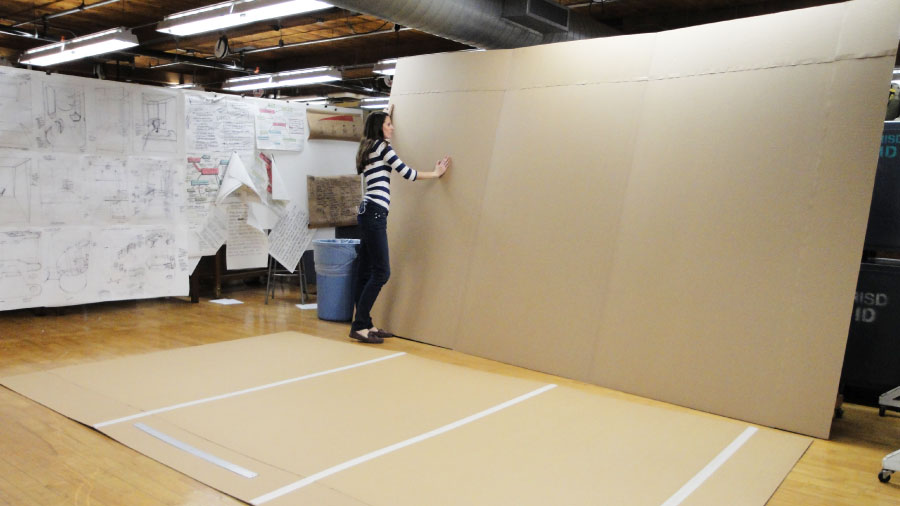
I created a full-size mock-up of a standard toll booth and built it in a way where I could transform the booth into my two-person toll booth concept. This would enable my classmates and I to experience the impact of the changed space.
Increased awareness of one’s surroundings creates a feeling of control over one’s space. Feeling in control of one’s space is empowering.
The “S” shaped plaza increases sightlines between colleagues. This creates a feeling of mutual space and promotes the notion of a workplace community. Working alongside one’s colleagues on a shared task is empowering.
The toll collector’s booth no longer blends in with the linear architecture of the plaza. It demands attention from oncoming motorists.
The redesigned toll booths and new plaza layout fit within existing plaza dimensions for ease and affordability of new construction.
Aamodt, Michael. Industrial/Organizational Psychology: An Applied Approach. Cengage Learning, 2012.
Al-Deek, Haitham M. and Jack Klodzinski. Proposed Level of Service Methodology for Toll Plazas. Washington D.C.: National Research Council, 2002.
Belenky, A.S. Operations Research in Transportation Systems - Ideas and Schemes of Optimization Methods. Kluwer Academic Publisher,1998.
Ceballos, Gustavo and Owen Curtis. Queue Analysis at Toll and Parking Exit Plazas: A Comparison between Multi-server Queuing Models and Traffic Simulation. http://www.ptvamerica.com /docs/VISSIMQueueAnalysis.pdf
Choa, Xiuli. Design and Evaluation of Toll Plaza Systems. Newark.
Gilbreth, Lillian M. The Psychology of Management. New York: Macmillian Co., 1919.
Gross, Donald and Carl M. Harris. Fundamentals of Queueing Theory. New York: Wiley, 1998.
Hock, Ng Chee. Queueing Modeling Fundamentals. New York: Wiley,1996.
McDonald, David R. Development of Toll Plaza Design Guidelines and Creation of a Toll Plaza Design Model. Nashville: Vanderbilt University, 1999.
New Jersey Institute of Technology - National Center for Transportation and Industrial Productivity / International Intermodal Transportation Center. Ten Year Plan to Remove the Toll Barriers on the Garden State Parkway.
Schaufler, Albert. Toll Plaza Design: A Synthesis of Highway Practice. Washington D.C.: National Academy Press, 1997.
Wood, Michael C and John Cunningham. Frank and Lillian Gilbreth: Critical Evaluations in Business and Management. Taylor & Francis, 2004.

© 2019 Stephanie DelVecchio All Rights Reserved